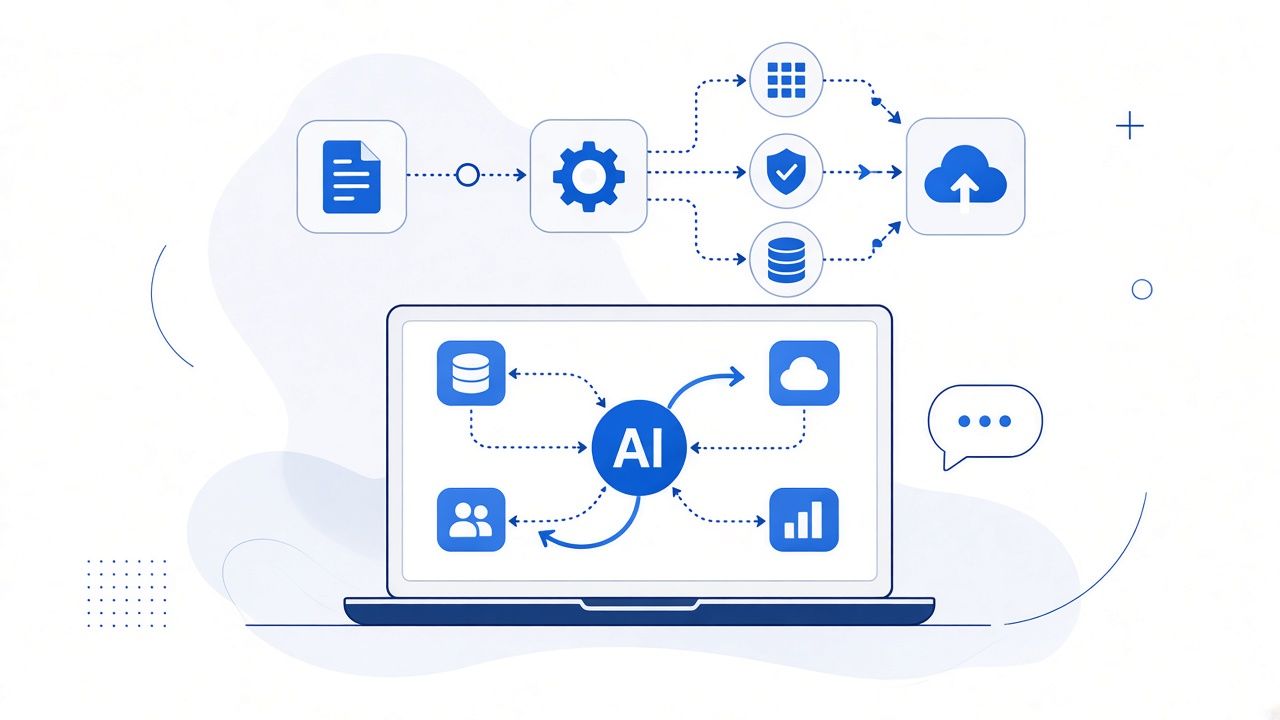
An AI-enabled virtual assistant uses tools like ChatGPT, Claude, Zapier, and Make to automate routine work, and a business intelligence virtual assistant pulls data from your CRM, ad accounts, and finance tools into dashboards and weekly reports your team can act on. The best outcomes come from pairing the software with a person who owns the workflow, checks the output, and keeps the reports current.
You can hire a full-time AI Implementation Specialist through Rekruuto for $2,500 a month, with a 14-day start. Not sure the role fits? Take the should I hire offshore quiz or read more AI implementation guides.
What are AI-enabled virtual assistants?
AI-powered virtual assistants are at the forefront of revolutionizing business operations in today’s increasingly digital world. By leveraging artificial intelligence, these virtual assistants automate routine tasks, streamline business processes, and enhance customer interactions. Unlike traditional automation tools, AI-powered virtual assistants are capable of understanding context, learning from data, and adapting to new challenges, making them invaluable assets for modern businesses.
With the ability to handle everything from scheduling and data entry to more complex customer service inquiries, AI-powered virtual assistants free up valuable time for human employees to focus on strategic initiatives. This shift not only boosts efficiency but also provides businesses with a competitive edge by enabling faster, more informed decision-making and delivering personalized, data-driven insights.
As organizations continue to embrace AI-powered virtual assistants, they are discovering new ways to drive growth, improve customer satisfaction, and transform business operations. The integration of artificial intelligence into daily workflows is no longer a futuristic concept—it’s a practical solution that is already delivering measurable results across industries.
What are the key takeaways?
- AI-powered virtual assistants automate routine tasks, allowing employees to focus on strategic activities and increasing overall productivity.
- These assistants enhance customer service by providing personalized, 24/7 support, improving customer satisfaction and loyalty.
- Companies leveraging AI assistants experience significant cost savings and operational efficiency, enabling resources to be redirected toward innovation and growth.
Redefining Business Operations with AI-Enabled Virtual Assistants

Imagine a workplace where mundane tasks are handled with precision and efficiency, leaving employees to focus on strategic and complex activities. This vision is becoming a reality with the advent of AI-powered virtual assistants. These digital aids are transforming business operations by automating routine tasks, thereby allowing human workers to concentrate on higher-value activities. Through the use of AI technologies, businesses can streamline workflows, reduce human error, and significantly enhance overall efficiency.
AI virtual assistants are not just about automation; they are about optimization. They analyze complex data to provide actionable insights through advanced data analysis, contributing to smarter, data-driven decision-making. This process often requires minimal human intervention, enabling rapid and accurate insights that democratize access to business intelligence. This fundamental shift in how businesses operate leads to substantial improvements in productivity and business performance, thanks to the AI-powered assistant and artificial intelligence.
Robust data management practices are essential to ensure the quality and reliability of insights generated by AI virtual assistants.
Let’s dive deeper into how AI assistants are revolutionizing business operations through automation, productivity enhancement, and data-driven insights.
Automating Routine Tasks
One of the most significant advantages of AI-powered virtual assistants is their ability to handle repetitive tasks with remarkable efficiency. Automating routine processes enhances overall efficiency and reduces the likelihood of manual errors. This not only frees up employees to focus on more complex tasks but also improves productivity by creating an environment where human resources can be utilized for high-value activities.
With the help of machine learning and robotic process automation, AI-driven assistants take over mundane tasks, ultimately revolutionizing business operations.
Enhancing Productivity
AI virtual assistants are game-changers when it comes to enhancing productivity. They offer several key benefits:
- Streamlining workflows
- Reducing errors in business processes
- Allowing teams to focus on more strategic tasks
- Automating routine tasks, which minimizes human error
- Leading to significant cost savings
As a result, businesses experience improved efficiency and higher worker output, which is crucial for gaining a competitive edge in today’s fast-paced business environment.
Data-Driven Decision Making
In the realm of decision-making, AI-driven analytics and data analytics play a pivotal role by:
- Analyzing data in real-time to provide actionable insights that empower businesses to make smarter decisions. AI virtual assistants also leverage historical data to forecast future trends, optimize operations, and anticipate potential disruptions.
- Accelerating the analysis process.
- Enhancing accuracy.
- Democratizing data access across organizations.
- Enabling real-time insights through AI virtual assistants, generating insights that allow employees to ask questions and receive instant responses.
This capability transforms data accessibility and supports more informed decision-making.
Moreover, AI-powered virtual assistants sift through vast amounts of data, including sales data, to uncover hidden insights that lead to improved forecasting and actionable insights. They also identify market trends, guiding strategic business decisions. This not only enhances business intelligence but also allows managers to focus on higher-level strategic decisions.
However, the successful implementation of AI assistants requires careful preparation, investment, and high-quality data to ensure accurate and reliable insights.
Revolutionizing Customer Service

Customer service is another domain where AI technologies are making a significant impact. AI-powered virtual assistants are transforming customer support through intelligent automation, providing personalized, immediate service and 24/7 support. These virtual agents, powered by conversational AI, enable effective communication and ensure that customers receive timely responses to their inquiries.
A key advantage of AI assistants in customer service is their 24/7 availability. Virtual agents are available around the clock, ensuring constant customer support and enhancing customer satisfaction. By transforming how companies communicate and serve customers, AI-powered assistants enable personalized interactions that cater to individual needs and preferences.
Handling Customer Inquiries
AI virtual assistants excel in handling customer inquiries through various channels such as chatbots, emails, and phone calls. Their capabilities include:
- Troubleshooting common issues by accessing extensive knowledge bases
- Providing 24/7 support
- Efficiently routing calls
- Communicating in multiple languages enhances the reach and effectiveness of customer service
By resolving a significant portion of customer queries instantly, AI-driven assistants free up human agents to tackle more complex issues, ultimately improving overall customer satisfaction.
Personalizing Customer Interactions
Personalization is a crucial aspect of modern customer service, and AI-driven assistants excel in this area. Using website data and CRM platforms, AI tools customize interactions based on user behavior and preferences. These assistants can factor in users’ goals and emotional states to provide tailored advice and support.
Emerging developments in AI, such as context awareness and emotional recognition, will further enhance the personalization of customer interactions, leading to more satisfying customer experiences.
Improving Customer Loyalty
Consistent and personalized support through AI assistants plays a significant role in building customer loyalty. Offering 24/7 support and personalized interactions strengthens customer relationships, directly increasing loyalty.
AI sentiment analysis helps AI agents understand a customer’s emotional state, allowing for more empathetic and effective interactions. This combination of personalized support and emotional understanding creates a foundation for enhanced customer loyalty, ultimately contributing to business growth and a competitive edge.
Streamlining Internal Processes

Internal processes are the backbone of any business, and AI-powered tools are revolutionizing these processes by significantly cutting down the time required for complex tasks. AI virtual assistants can reclaim substantial time for teams by automating routine tasks, allowing employees to focus on strategic work.
In addition, AI virtual assistants can support risk management by monitoring internal processes for compliance and identifying potential risks, helping organizations proactively address legal and financial challenges.
Task Automation
AI alters work processes by automating routine tasks such as generating invoices, data entry, and scheduling meetings. This automation results in labor cost reductions and improves overall business performance. Robotic process automation (RPA) uses software robots to mimic human activities, enhancing efficiency and allowing employees to focus on more complex tasks.
By embracing AI-driven automation, businesses can significantly enhance their operational efficiency and productivity.
Workflow Optimization
AI assistants optimize workflows by:
- Analyzing productivity patterns and adjusting schedules accordingly
- Analyzing prospect behavior across various touchpoints to improve workflows and enhance overall business performance
This optimization leads to cost savings and improved efficiency, making AI an invaluable asset in modern business operations.
Cost Savings
The financial benefits of AI-driven automation are substantial:
- Enhancing operational efficiencies
- Minimizing labor costs, enabling significant long-term cost savings
- Reducing error rates, which contributes to overall cost savings
- Allowing companies to redirect resources towards innovation and growth strategies
Enhancing Team Collaboration and Performance

AI-enabled virtual assistants are also making waves in enhancing team collaboration and performance. Seamlessly integrating into existing business systems, these assistants facilitate effective team collaboration and ensure real-time information sharing.
AI assistants enhance meeting outcomes by transcribing discussions, highlighting key points, and providing summary reports with tasks and deadlines. This leads to improved team performance and better decision-making, supported by an AI assistant.
Seamless Integration
Seamless integration of AI assistants with existing enterprise systems is essential for their effectiveness. These assistants support remote team members by managing repetitive tasks and ensuring connectivity among the team. By providing real-time updates, AI assistants ensure that all team members are informed, reducing delays in decision-making and enhancing overall team performance.
Performance Monitoring
AI systems track performance data effectively, providing managers with insights that inform decision-making about team management. By proactively identifying performance trends, AI allows managers to address issues before they escalate, leading to improved team performance. Key takeaways from this approach highlight the importance of timely interventions.
Personalized Employee Support
Successful AI implementations emphasize enhancing human capabilities by educating employees on appropriate AI use and addressing skill gaps with training partnerships. AI assistants deliver personalized training content based on roles, learning preferences, and skill gaps, enabling tailored learning experiences that reflect company values.
Automating repetitive tasks allows human employees to focus on specialized tasks, increasing job satisfaction and productivity.
AI Adoption and Implementation
The adoption of AI-powered virtual assistants is fundamentally changing the way businesses operate. As organizations look to harness the power of artificial intelligence, successful implementation requires a thoughtful approach that addresses both technical and human factors. By strategically integrating AI-powered virtual assistants, businesses can unlock new levels of efficiency, agility, and innovation.
Overcoming Barriers to Adoption
A common concern when introducing AI-powered virtual assistants is the fear that they will replace human employees. In reality, these AI assistants are designed to take over repetitive tasks and routine processes, allowing human employees to focus on more meaningful work that requires creativity, empathy, and critical thinking. By automating routine and repetitive tasks, AI-powered virtual assistants empower teams to contribute at a higher level, driving business growth and innovation.
Understanding the true role of AI-powered virtual assistants helps businesses move past apprehension and embrace the benefits of automation. When human employees and AI assistants work together, organizations can achieve greater productivity and job satisfaction across the board.
Best Practices for Integration
Integrating AI-powered virtual assistants into existing business systems requires careful planning and execution. To maximize the value of these virtual assistants, businesses should:
- Assess business needs: Identify which routine tasks and business processes can be optimized or automated by AI-powered virtual assistants to deliver the greatest impact.
- Select the right technology: Choose AI-powered virtual assistants that align with your organization’s goals, technical resources, and existing infrastructure.
- Training and development: Invest in training programs that help human employees understand how to collaborate effectively with AI-powered virtual assistants, ensuring a smooth transition.
- Monitoring and evaluation: Continuously track the performance of AI-powered virtual assistants, using data analytics to measure their impact and make improvements as needed.
By following these best practices, businesses can ensure that their investment in AI-powered virtual assistants delivers measurable improvements in efficiency, productivity, and business performance.
Change Management and Training
Successful AI adoption goes beyond technology—it requires a strong focus on change management and employee training. To facilitate a smooth transition, businesses should:
- Communicate the benefits: Clearly explain how AI-powered virtual assistants will support human employees, enhance their roles, and contribute to overall business success.
- Provide training: Offer comprehensive training programs that equip employees with the skills needed to work alongside AI-powered virtual assistants and leverage their capabilities.
- Encourage collaboration: Foster a culture of collaboration where human employees and AI-powered virtual assistants work together to achieve shared goals.
- Continuously evaluate: Regularly assess the effectiveness of AI-powered virtual assistants and make adjustments to ensure they continue to meet evolving business needs.
By prioritizing change management and ongoing training, organizations can maximize the benefits of AI adoption, support data-driven decision making, and maintain a competitive edge in an increasingly digital world. Embracing AI-powered virtual assistants is not just about automating tasks—it’s about empowering human employees, driving innovation, and transforming the future of work.
Future Trends in AI-Enabled Virtual Assistants

As we look to the future, the role of AI-enabled virtual assistants is set to expand even further. Many organizations plan to increase their investment in AI technologies.
These assistants are expected to become more adept at handling complex tasks and addressing challenges, delivering transformative changes in how businesses operate.
Emotional Intelligence
AI assistants are becoming increasingly capable of emotional intelligence, which is critical for improving interactions with users. Future AI-powered chatbots will incorporate emotional recognition to enhance user interactions and provide more context-aware responses.
This development will enable AI to offer more empathetic and effective support, enhancing customer satisfaction and overall business intelligence.
Multimodal Interaction
Next-generation AI assistants will be capable of processing multiple forms of input, including text, voice, and visual data simultaneously. This multimodal interaction will enhance the assistant’s ability to understand and respond to complex customer interactions and behaviors, making them even more effective in an increasingly digital world through natural language processing.
Continuous learning will ensure that these assistants remain up-to-date and capable of handling diverse tasks and interactions.
Hyperpersonalization
Future AI assistants will utilize predictive analytics modeling to foresee user needs based on previous interactions and current context. This hyperpersonalization will lead to more tailored and satisfying customer experiences, reducing human error and requiring minimal human oversight.
Understanding and anticipating customer behavior, AI assistants will offer more relevant and timely support, enhancing customer satisfaction and loyalty.
How Rekruuto fits
Rekruuto recruits full-time offshore professionals who can run these AI and reporting workflows inside your business.
Here is how hiring through Rekruuto works.
Rapid Onboarding
A hire can start in 14 days, so you can add capacity without a long recruiting cycle.
Every hire comes with a 1-week trial. If the fit is wrong, we find a replacement or refund you.
Cost Efficiency
Most roles are $1,800 a month, and AI Implementation Specialists are $2,500 a month. Compare that with a local hire in our offshore salary calculator.
Time Zone Compatibility
Rekruuto’s approach to time zone compatibility ensures that virtual assistants operate within the client’s time zone, facilitating effective communication and collaboration. This alignment is crucial for seamless integration and project management, allowing teams to work more cohesively and efficiently.
The ability to have virtual assistants available during the client’s working hours enhances overall business performance and client satisfaction.
What should you remember?
In summary, the integration of AI-enabled virtual assistants is fundamentally transforming business operations across various sectors. These intelligent systems handle routine tasks, enhance productivity, and provide data-driven insights, enabling businesses to focus on higher-value activities. The revolution in customer service, streamlined internal processes, and improved team collaboration are just a few examples of the profound impact AI can have.
Embracing AI-driven automation, with a person who owns the workflow, is now a practical step for most businesses.
What does a business intelligence virtual assistant do?
A business intelligence (BI) virtual assistant turns raw data into reports people use. Typical work includes:
- Pulling data from the CRM, ad platforms, e-commerce store, and accounting software
- Cleaning and combining it in Google Sheets, Excel, or a database
- Building and updating dashboards in Looker Studio, Power BI, or Tableau
- Writing a short weekly summary of what changed and why
- Setting up alerts when a number moves outside its normal range
The benefits are faster reporting, fewer manual copy-and-paste errors, and decisions based on current numbers rather than last month’s.
Frequently asked questions
What is a business intelligence virtual assistant?
A remote assistant who collects data from your business tools, cleans it, and turns it into dashboards and reports, often using tools like Google Sheets, Looker Studio, Power BI, or Tableau, with AI tools to speed up analysis.
What is the role of business intelligence virtual assistants?
Their role is to make reporting reliable and regular: gather the numbers, keep dashboards current, flag changes, and give leaders a short written summary so decisions are based on current data.
What are the benefits of business intelligence virtual assistants?
Faster and more consistent reporting, fewer manual errors, time back for managers who used to build reports themselves, and earlier warning when a key number moves.
How do AI-enabled virtual assistants deliver better outcomes?
By automating the repetitive steps (data entry, first drafts, summaries, and routing) while a person checks the output and handles exceptions. The combination is faster than manual work and more reliable than automation left unattended.
Will an AI virtual assistant replace my team?
AI tools take over repetitive tasks, but someone still has to choose the workflows, check the results, and handle edge cases. Most teams use AI to free people for higher-value work.
How do AI-enabled virtual assistants automate routine tasks?
AI-enabled virtual assistants automate routine tasks like data entry, scheduling, and invoice generation, allowing you to focus more on important projects. They really help in boosting productivity by taking care of the mundane stuff!
How do AI virtual assistants enhance productivity?
AI virtual assistants boost productivity by streamlining workflows and minimizing errors, allowing teams to concentrate on more important tasks. This efficiency helps everyone work smarter and get more done.
In what ways do AI assistants contribute to data-driven decision-making?
AI assistants boost data-driven decision-making by analyzing complex data quickly and providing actionable insights, helping businesses make smarter choices.
How can AI improve customer service?
AI can dramatically enhance customer service by offering round-the-clock support and personalizing interactions to suit individual needs, which ultimately boosts customer satisfaction. It’s all about making experiences smoother and more tailored!
Ready to put AI to work in your business?
Hire a full-time AI Implementation Specialist for $2,500 a month, or another role from $1,800 a month, and we will scope the work with you.
- Most roles are $1,800 a month, and AI Implementation Specialists are $2,500 a month.
- Hire and onboard in 14 days.
- 1-week trial: if the fit is wrong, we replace the hire or refund you.
- Full-time professionals who work in your time zone.
Get matched with your hire to scope the role with us.