
The duct tape marketing system is a small-business plan with one strategy, a few channels, and a weekly routine, instead of a new tactic every month. A marketing assistant can run those tasks from $1,800 a month, with a 14-day start and a 1-week trial.
Picture this: You’re in your garage, and something breaks. You reach for the one tool that seems to fix almost anything—duct tape. It’s not pretty. It won’t win design awards. But it works, it holds, and it gets the job done without draining your wallet.
That’s exactly the philosophy behind duct tape marketing—a practical small business marketing system built for real life small businesses, not Fortune 500 budgets.
John Jantsch pioneered this approach because he saw something broken in how small business owners approached marketing. They jumped from tactic to tactic, chased the latest marketing trends, and burned through cash on campaigns that never connected to each other.
This article gives you a concrete, practical roadmap you can begin using within 24 hours. Not theory. Not fluff. A working system.
The duct tape marketing system is channel-agnostic. It worked for offline based local business marketing in the early 2000s. It works for social media marketing today. And it will work for whatever comes next because it’s built on fundamentals that don’t change.
What follows is skimmable, actionable, and written in a coach-like tone. Let’s build your marketing engine.
The Origins and Core Philosophy of Duct Tape Marketing
In the early 2000s, small business marketing was chaos.
Yellow pages still mattered. Local print ads competed with early radio spots. Then Google arrived. Then social media. Suddenly, business owners faced a firehose of options with zero guidance on what actually worked.
Marketing consultants pushed expensive campaigns. Agencies sold tactics without strategy. Everyone promised results, but few delivered systems that small business owners could actually run themselves.
John Jantsch saw this mess and created something different—a marketing strategy that prioritized strategy before tactics, simplicity over complexity, and documented processes over random activities.
The core idea: treat marketing as a repeatable system, not a collection of one-off campaigns.
Here’s what makes the duct tape marketing philosophy different:
- Build marketing assets: Content, email lists, and referral relationships keep working long after you create them
- Prioritize customer trust: Education and reputation beat short-term tricks
- Document everything: A systematized approach means anyone can follow your process
- Stay time-efficient: Owner-operators juggle sales, delivery, and admin—your marketing must fit reality
This isn’t about spending more money. It’s about building a systematic referral machine that compounds over time.
The philosophy works because it respects how small business leaders actually operate. You don’t have a marketing department. You have yourself, maybe a small team, and limited hours. Every marketing effort must earn its place.

The Duct Tape Marketing System Framework
The duct tape marketing system connects every marketing activity into a unified flow—from first contact to loyal advocate.
Think of it as a complete machine where each part serves a purpose. Random tactics become intentional steps in a customer journey.
The main building blocks include:
| Building Block | Purpose |
|---|---|
| Ideal Client Profile | Define exactly who you serve best |
| Core Marketing Message | Articulate your unique value clearly |
| Customer Journey (Hourglass) | Map the path from stranger to referrer |
| Educational Content | Build trust before the sale |
| Web Presence | Create a 24/7 marketing hub |
| Advertising & Outreach | Generate qualified inquiries |
| Referral Engine | Turn happy clients into a volunteer sales force |
Each block should be documented in a short playbook. When you hire help—whether full-time staff or offshore talent—they can follow the same process without reinventing the wheel.
The marketing hourglass shapes everything. Traditional funnels stop at the sale. The hourglass extends beyond, because repeat customers and referrals often drive more revenue than new customer acquisition.
Let’s break down how this works.
The Marketing Hourglass Model
The marketing hourglass is an evolution of the traditional funnel. Instead of ending at “buy,” it extends into the stages that generate how loyal customers become your best marketing asset.
Here are the seven stages:
- Know — The prospect becomes aware you exist
- Like — They find something that resonates or attracts them
- Trust — They believe you can deliver on your promises
- Try — They experience a low-risk sample of your value
- Buy — They become a paying customer
- Repeat — They purchase again or expand the relationship
- Refer — They actively recommend you to others
Example for a local plumbing service:
| Stage | Tactic Example |
|---|---|
| Know | Local SEO, Google Business Profile |
| Like | Helpful blog posts about common plumbing issues |
| Trust | Case studies, online reviews, testimonials |
| Try | Free home plumbing inspection |
| Buy | First service call |
| Repeat | Annual maintenance program |
| Refer | Referral program with thank-you gift |
Every tactic—SEO, email marketing, social media, direct mail, events—should map to one or more of these stages.
Audit your current efforts: Which stages are strong? Which are missing or weak?
Most small business owners pour energy into “Know” and “Buy” while neglecting “Trust,” “Repeat,” and “Refer.” That’s where the real leverage lives.
📣
When to Hire a Marketing Assistant (and What to Delegate)
If you want this system to run consistently, consider hiring a marketing assistant to handle the repeatable “keep the machine moving” work. A good assistant helps you execute the hourglass process every week without you living in your inbox or bouncing between tools.
High-leverage tasks to delegate:
- Draft and schedule weekly content based on your 25 customer questions
- Repurpose one piece of content into social posts and newsletter snippets
- Publish blog posts and keep your website formatting and internal links clean
- Manage simple CRM updates and follow-up reminders so leads never go cold
- Request, collect, and organize testimonials and case studies into an “evidence” folder
- Track basic metrics (traffic, leads, conversions) and send a weekly scorecard
Your job stays focused on strategy, messaging, and client conversations. The assistant keeps the documented system running.
Identify and Understand Your Ideal Client
“Everyone” is not your ideal customer.
Vague targeting wastes ad spend, dilutes your message, and attracts clients who drain your time while negotiating on price.
The ideal client concept is central to effective marketing strategies. Here’s a concrete method to find yours:
Analyze your last 12–24 months of clients:
- Which were most profitable?
- Who paid on time without hassle?
- Who referred other clients?
- Who was genuinely enjoyable to work with?
Look for patterns. You’ll likely notice that your best clients share characteristics—industry, company size, location, specific problems, or buying triggers.
Create 1–3 ideal client profiles with:
- Age range or company stage
- Location (especially for local marketing strategies)
- Industry (if B2B)
- Main problem they face
- What triggers them to buy
Use real data sources:
- CRM exports
- Accounting reports showing revenue by client
- Email list engagement metrics
- Customer service notes
Stop guessing. Let the data show you who values what you offer.
Action item: Interview 5–10 of your favorite clients in the next 30 days. Ask about their goals, frustrations, and why they chose you over alternatives. The language they use becomes gold for your marketing materials.

Translating Ideal Client Insights into Targeting
Once you’ve defined your ideal client, turn those insights into practical targeting:
Local SEO keywords:
- Combine service + location + problem
- Example: “emergency plumber Austin TX” or “small business accountant Denver”
Ad audience settings:
- Demographics matching your ideal client profile
- Interest targeting based on behaviors you’ve observed
- Lookalike audiences from your best customer emails
Email list segments:
- Group subscribers by problem type, location, or buying stage
- Personalize messaging to each segment
Example: Home services business targeting
A roofing contractor in Phoenix defines their ideal client as:
- Homeowner in specific zip codes (established neighborhoods)
- Home built 15–25 years ago (roof replacement timeline)
- Household income $75K+ (can afford quality work)
- Recently experienced storm damage or noticed leaks
This profile shapes everything: which neighborhoods get direct mail, which keywords get ad budget, and what content gets created.
Prioritize channels based on where ideal clients actually research and decide—search, social, referrals, or local events.
Eliminate or reduce marketing aimed at poor-fit segments. If a certain type of client consistently drains time and price-shops, stop targeting them. Your marketing business grows faster when you focus.
Discover and Sharpen Your Core Marketing Message
“We provide great service” says nothing.
Your core marketing message must clearly state who you help and what outcome you deliver. Generic claims blend into noise. Sharp messages cut through.
Use this structure: Action verb + Target market + Problem solved
Examples:
- “We help local restaurants fill empty tables through targeted neighborhood marketing”
- “We protect small manufacturers from costly compliance violations”
- “We get first-time homebuyers into their dream homes without the stress”
Mine real language from customers:
- Review emails where clients thanked you
- Read your Google and Yelp reviews
- Listen to sales call recordings
- Note exact phrases clients use to describe their problems and your solutions
This language resonates because it came from real people with real problems.
Test your draft message:
Over the next 7–14 days, share your message with customers and staff. Watch for:
- Do they understand it immediately?
- Can they repeat it back accurately?
- Does it spark questions or interest?
Refine based on what sticks. Your core message becomes the foundation for website headlines, social profiles, elevator pitches, and ad copy.
Crafting a Memorable “Talking Logo” Statement
A talking logo is a simple, spoken one-liner that explains your value when someone asks, “What do you do?”
Unlike a visual logo, this statement travels through conversations, networking events, and casual mentions.
Structure examples:
- “I help [target market] [solve problem] so they can [achieve outcome]”
- “We’re the [category] company that [key differentiator]”
- “For [target market], we [deliver specific result]”
Concrete examples:
- “We help small law firms attract better clients without relying on expensive referral fees”
- “We’re the IT company that actually answers the phone when something breaks”
- “For growing e-commerce brands, we turn website visitors into repeat buyers”
Where to place your talking logo:
- Homepage hero section
- Social media bios
- Proposal cover pages
- Presentation intros
- Email signatures
- Business cards
Quick checklist:
- Clear target market identified
- Clear benefit stated
- Plain language (no jargon)
- Under 15 words
- Sounds natural when spoken aloud
The Duct Tape Marketing Podcast frequently features examples of how consulted small business owners refined their talking logos into memorable statements that opened doors.
✅
Why work with Rekruuto to hire a Marketing Assistant from the Philippines
If you want this system to run weekly without adding more work to your plate, Rekruuto can help you hire a dedicated marketing assistant from the Philippines to keep your marketing engine moving.
What you get with the right assistant:
- Consistent execution of your content and promotion plan
- Help turning one article into multiple social posts and newsletter snippets
- Clean publishing, formatting, and internal linking so your website stays sharp
- Organized proof assets, like testimonials, case studies, and partner notes
- Simple reporting so you can see what is working without digging through tools
Why Rekruuto: We help you source, vet, and match talent that fits your workflow, then support onboarding so the assistant becomes part of your team fast.
Create Educational Marketing Content That Builds Trust
Content marketing works best when it teaches.
Instead of pushing sales messages, answer the questions your buyers ask before they’re ready to buy. This shortens the sales cycle because prospects arrive pre-educated and pre-convinced.
Simple editorial approach:
- List the top 25 questions customers ask before buying
- Turn each question into a blog post, guide, or short video
- Publish consistently
That’s it. No complex editorial calendars needed.
Prioritize formats based on your capacity:
| Format | Best For | Time Investment |
|---|---|---|
| Written articles | SEO, detailed explanations | Medium |
| Checklists/guides | Lead magnets, downloads | Low |
| Short videos | Social engagement, personality | Medium |
| Webinars | Complex topics, live Q&A | High |
| How-to PDFs | Gated content, email capture | Low-Medium |
One high-quality educational piece per week for 90 days beats irregular publishing bursts. Consistency wins.
Map each content piece to a marketing hourglass stage:
- Trust stage: “5 Questions to Ask Before Hiring a [Service Provider]”
- Try stage: “Free Assessment: Is Your [System] Working at Full Capacity?”
- Buy stage: Detailed service pages with FAQs
- Repeat stage: Advanced tips for existing customers
- Refer stage: “How to Explain [Your Service] to a Friend Who Needs Help”
Leveraging Case Studies, Testimonials, and Partnerships
Case studies and testimonials provide proof at the critical “buy” stage when prospects need final reassurance.
Simple case study structure:
- Client background (who they are, their situation)
- Problem they faced (in their words)
- Approach you used (briefly)
- Measurable results (specific numbers when possible)
- Short quote from the client
Request testimonials with specific prompts:
Instead of “Can you write us a review?” ask:
- “What specific result did working with us help you achieve?”
- “What was your situation before we started working together?”
- “What would you tell someone considering working with us?”
This generates testimonials that mention outcomes (saved time, increased revenue, avoided risk) rather than generic praise.
Co-create content with complementary businesses:
Partner with non-competing businesses that serve your ideal client at different points in their journey:
- Joint webinars
- Co-branded guides
- Guest posts on each other’s platforms
- Shared case studies
Placement strategy:
- Case studies on service/product pages
- Testimonials throughout the website
- Both in proposal attachments
- Featured in presentation decks
Collect all testimonials and case studies in a central “evidence” folder for easy repurposing across channels.
Build a Web Presence That Works 24/7
Your website should act as the central hub of your marketing system, not just an online brochure.
This is where every marketing effort connects. Ads drive traffic here. Content lives here. Leads get captured here.
Essential pages for a small business website:
| Page | Purpose |
|---|---|
| Homepage | Clear value proposition, immediate credibility |
| Services/Products | Detailed offerings with benefits and pricing info |
| About | Story, team, credentials (builds trust) |
| Testimonials/Case Studies | Social proof |
| FAQ | Overcome objections, save sales time |
| Contact | Easy ways to reach you |
| Lead Magnet Pages | Capture emails with valuable offers |
SEO basics that matter:
- Clear page titles with service + location keywords
- Proper heading structure (H1, H2, H3)
- Internal links connecting related pages
- Location + service keywords in content naturally
- Fast loading times (under 3 seconds)
- Mobile-friendly design
Non-negotiables:
- Mobile usability (most visitors come from phones)
- Clear calls to action on every page
- Fast loading times
- Simple navigation
- Basic analytics installed
- Conversion tracking for leads/calls/bookings
Your website represents the ultimate marketing engine for an online based business or any business with digital presence. Duct tape marketing shows small business owners how to build this foundation properly.
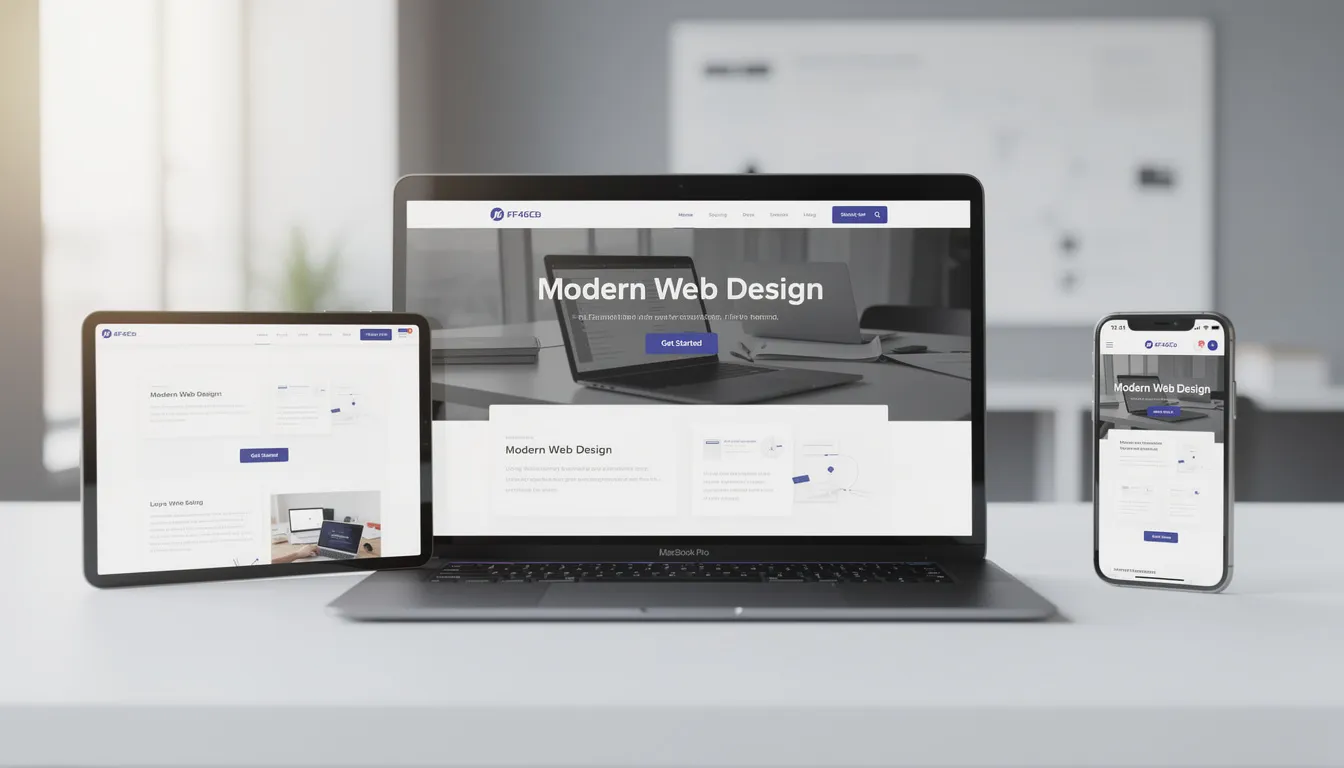
Integrating SEO, Email, and Social into a “Total Web Presence”
A total web presence combines your website, search visibility, email list, and social profiles—all reinforcing the same core marketing message.
How content flows through the system:
- Create educational blog post on your website
- Optimize for search (title, headings, keywords)
- Share on chosen social channels with commentary
- Feature in email newsletter to subscribers
- Repurpose into other formats (video, graphics, guides)
One piece of content, multiple touchpoints. No extra creation needed.
Simple weekly rhythm:
| Day | Activity |
|---|---|
| Monday | Publish new educational content |
| Tuesday | Share on social with insights |
| Wednesday | Email newsletter featuring the content |
| Thursday | Engage with comments and questions |
| Friday | Plan next week’s content |
Email sequences for new leads:
When someone downloads your lead magnet or signs up:
- Welcome email: Thank them, deliver what they requested
- Educational follow-up: Valuable content related to their interest
- Proof email: Case study or testimonial showing results
- Offer email: Clear next step to work with you
This sequence builds trust systematically instead of jumping straight to a sales pitch.
Digital marketing and content marketing work together when integrated into a cohesive system. The Duct Tape Marketing Revised edition emphasizes this integrated approach for modern business growth.
Run Advertising and Direct Outreach That Actually Gets Results
Smart advertising uses a two-step approach: generate inquiries first, then nurture leads over time.
Instead of running brand awareness ads hoping for immediate sales, focus on specific offers that attract your ideal client.
Specific offer examples:
- Free assessment or audit
- Downloadable checklist or guide
- Webinar or workshop
- Limited-time consultation
- Free trial or sample
Testing approach:
- Start with a small budget ($200-500)
- Test one offer with one audience
- Measure cost per lead
- Scale what works, cut what doesn’t
- Test new variations
Track leads by source in a simple CRM or spreadsheet. Within 60–90 days, you’ll identify high-ROI channels.
Offline methods still work:
Local marketing strategies presented through traditional channels can be highly effective:
- Postcards to targeted neighborhoods
- Local print ads in community publications
- Speaking at local events
- Sponsorships with visibility
- Networking groups
The key: plug these into the same hourglass system. Every offline touchpoint should direct people to your web presence for next steps.
Using Direct Mail and Local Campaigns Strategically
Direct mail works when done systematically, especially for local marketing strategies targeting specific geographic areas.
Direct mail campaign structure:
- Targeted list: Specific criteria matching your ideal client
- Compelling headline: Speaks to their main problem
- Clear offer: Low-risk next step
- Strong call to action: Exactly what to do next
- Deadline: Creates urgency
Example: Local accounting firm campaign
A CPA firm sends a letter to small business owners in their county:
- Headline: “Is Your Business Missing Tax Deductions This Year?”
- Offer: Free 30-minute tax planning consultation
- Deadline: “Schedule before [date] to prepare for next quarter”
- Follow-up: Email sequence and phone call 5 days later
Testing strategy:
- Test different headlines against each other
- Test different offers
- Test different lists
- Change one variable at a time to learn what works
Integration with online presence:
- Create dedicated landing pages for campaigns
- Use trackable phone numbers
- Include QR codes linking to specific pages
- Capture email addresses for future nurturing
Run campaigns in short sprints (30-day windows) so results can be reviewed and improved quickly. This practical and useable way of testing makes affordable marketing possible.
Build a Systematic Referral Engine
Referrals shouldn’t be left to chance. Treated as a designed system, they become a primary source of high-quality leads.
The referral engine concept transforms passive hope into active generation.
Create a referral one-sheet:
This simple document tells people exactly who you serve and how to refer:
- Who you serve (ideal client description)
- Problems you solve
- Examples of ideal clients
- How to introduce you (email template, phone script)
- What happens after a referral
Systematic referral requests:
Set recurring reminders every 90 days to ask satisfied clients for introductions:
“Who do you know that might be facing [specific problem] right now?”
Specific beats vague. “Do you know anyone who might need marketing help?” generates nothing. “Do you know another law firm owner frustrated with their website?” gets results.
Appreciation practices:
- Handwritten thank-you notes (rare and memorable)
- Small gifts for referrals that become clients
- Public recognition (with permission)
- Priority service for active referrers
Make referrals easy:
Provide templated language clients can forward:
“Hi [Name], I wanted to introduce you to [Your Name] at [Company]. They helped us [specific result]. I thought you might want to connect given [reason]. I’ve cc’d them here.”
The commitment engine runs on gratitude and easy actions.
Strategic Partnerships and Shared Client Bases
Strategic partners are non-competing businesses serving your ideal client at different points in their journey.
Identify 5–10 partner categories:
For a small business coach, potential partners might include:
- Accountants
- Business attorneys
- IT service providers
- Marketing agency owners
- Commercial insurance brokers
- HR consultants
- Commercial real estate agents
Each serves the same small business client but addresses different needs.
Collaboration opportunities:
| Type | Example |
|---|---|
| Co-hosted events | Joint workshop for local business owners |
| Featured content | Guest posts, podcast appearances |
| Bundled offers | “New business starter package” with multiple partners |
| Cross-referral agreements | Formal or informal mutual referrals |
Schedule quarterly partner check-ins:
- Review referrals sent and received
- Discuss new collaboration ideas
- Share updates on services and ideal clients
- Strengthen the relationship
Track partner-driven leads separately to understand which relationships generate long-term value. Some partners will send one referral ever. Others become a consistent pipeline.
This guide combines insights gained from both formal partner programs and organic relationship building. Fresh ideas laid out systematically beat random networking.
Who runs each stage of the marketing hourglass
The system works when the owner keeps the strategy and someone else runs the weekly routine. Here is a practical split across the seven hourglass stages.
| Stage | You decide | A marketing assistant runs |
|---|---|---|
| Know | Your message and the few channels you commit to | Scheduling posts, updating profiles, and keeping the content calendar |
| Like | Your voice and what you stand for | Formatting and publishing educational content you approve |
| Trust | Which stories and proof you can share | Collecting reviews and testimonials, and filing case study drafts for your sign-off |
| Try | The low-risk offer a prospect can sample | Sending the sample, checking that the form and follow-up email work |
| Buy | Pricing and terms | Following up on proposals and logging every lead in your CRM |
| Repeat | The cadence of check-ins | Sending reminders and renewal notes on your schedule |
| Refer | Who you ask and what you offer | Sending referral requests and tracking partner introductions |
Put the weekly routine in a one-page checklist, review the numbers together every Friday, and change one thing at a time. A full-time marketing assistant from Rekruuto is $1,800 a month, works your hours from the Philippines, and starts in 14 days, with a 1-week trial with replacement or refund. The instant quote page shows the price and start date.
Duct Tape Marketing is the work of John Jantsch. Rekruuto is not affiliated with Duct Tape Marketing, and this article is an independent summary.
Operationalizing and Maintaining Your Duct Tape Marketing System
The power of duct tape marketing comes from consistency and documentation, not any single tactic.
Random marketing efforts create random results. Documented systems create predictable growth strategies.
Create a simple internal playbook:
Document key processes so anyone can follow them:
- Lead handling (response time, follow-up sequence)
- Content production (topics, schedule, publishing process)
- Referral requests (timing, language, tracking)
- Review collection (when to ask, where to direct)
- Client onboarding (first 30 days experience)
Use checklists and calendar reminders:
| Task | Frequency |
|---|---|
| Publish content | Weekly |
| Ask for reviews | After each successful project |
| Follow up on leads | Within 24 hours |
| Request referrals | Every 90 days with active clients |
| Partner check-ins | Quarterly |
| Metrics review | Monthly |
Monthly metrics review:
Track and review:
- Total leads generated
- Lead sources (where did they come from?)
- Conversion rate (leads to customers)
- Average deal size
- Referral volume
- Customer retention
90-day improvement cycle:
Each quarter, choose one or two system elements to upgrade:
- Q1: Website conversion optimization
- Q2: Referral system improvement
- Q3: Content production efficiency
- Q4: Lead nurturing sequences
Small, focused improvements compound over time. This advanced education system approach builds the entire team involved in marketing.
Next Steps: Implementing in the Next 14 Days
Here’s your concrete 14-day action roadmap to implement the duct tape marketing system:
Days 1-3: Ideal Client Review
- Export client data from your CRM or accounting system
- Identify top 10 clients by profitability and experience
- Draft your first ideal client profile
- Schedule 3-5 client interviews
Days 4-5: Core Message Draft
- Collect phrases from reviews and customer emails
- Write three versions of your core message
- Create your talking logo statement
- Test with two trusted clients or colleagues
Days 6-8: Website and Profile Updates
- Update homepage headline with core message
- Refresh social media bios
- Add or update testimonials page
- Ensure contact information is prominent
Days 9-11: Basic Content Plan
- List top 15 questions customers ask
- Choose first 4 topics to create
- Set weekly publishing schedule
- Create first piece of educational content
Days 12-14: Referral and Follow-Up Processes
- Create referral one-sheet document
- Write referral request email template
- Set up 90-day reminder system
- Reach out to 3 potential strategic partners
Block two short time windows per day over these 14 days to work “on” marketing rather than only “in” the business.
Start small but finish each step. A simple working system beats an unfinished perfect plan.
Once the core is in place, improvements become easier. New tactics can be added without breaking what already works. Fresh ideas can be tested against your documented baseline.
The renowned marketing guru approach of duct tape marketing isn’t about perfection. It’s about building a resilient, owner-friendly growth engine that scales with your thriving business.
Whether you run an offline business or an online based business, the principles remain the same: know your ideal client, craft effective marketing strategies around a clear message, and build systems that run consistently.
The Duct Tape Marketing Podcast continues to share valuable marketing tips and actionable advice weekly. The small business marketing guide approach has helped thousands of marketing business owners gain valuable insights and implement better marketing strategy for their business goals.
Your marketing plan doesn’t need to be complicated. It needs to work. Like duct tape—simple, reliable, and built to hold everything together.
Start today. Your business growth depends on systems, not luck.
🚀
Ready to hire a marketing assistant to run this system?
If you want a dedicated marketing assistant to help implement and maintain your duct tape marketing system week after week, get in touch with Rekruuto.
Talk to Rekruuto: rekruuto.net
Frequently asked questions
What are the stages of the Duct Tape Marketing hourglass?
Know, like, trust, try, buy, repeat, and refer. The hourglass extends the traditional funnel past the sale to the stages where customers become repeat buyers and refer others.
Who should run the duct tape marketing system in a small business?
The owner sets the strategy, message, and offers. A marketing assistant can run the weekly routine: scheduling, email, reviews, referrals, CRM follow-up, and reporting.
What is the short answer?
The duct tape marketing system is a small-business plan with one strategy, a few channels, and a weekly routine, instead of a new tactic every month. A marketing assistant can run those tasks from $1,800 a month, with a 14-day start and a 1-week trial.
What should you know about the Origins and Core Philosophy of Duct Tape Marketing?
In the early 2000s, small business marketing was chaos.
What should you know about the Duct Tape Marketing System Framework?
The duct tape marketing system connects every marketing activity into a unified flow—from first contact to loyal advocate.
What should you know about discover and Sharpen Your Core Marketing Message?
“We provide great service” says nothing.
You can test the match on the 1-week trial with replacement or refund.