An AI Implementation Specialist turns a repeated process into a working workflow inside the tools you already use. They map the steps, pick the tool, connect it, test the output, teach the team, and keep it running after launch. Rekruuto places that person full time from $2,500 a month.
The job is to leave working workflows in your accounts, with notes a colleague can follow. If you are still choosing a vendor model, read specialist vs consultant vs agency first. If you are pricing it, read the cost guide.
What does an AI implementation specialist do day to day?
Day to day, they spend more time on a real process than on a new model announcement. A normal week is a queue of workflows in four states: not started, in test, live, and broken.
A single workflow moves through the same loop. Sit with the person who does the task today and write the steps, including the exceptions. Decide whether a rule is enough or a model is needed. Build the smallest version in Zapier, Make, n8n, or the product’s own automation. Run it on a sample of real records. Compare the output with what a person would have done. Fix the misses. Write the runbook. Turn on an alert. Only then let it run with a human still checking the risky cases.
They also do the unglamorous work. They rename fields when a CRM admin changes a property. They notice when a prompt starts drifting. They pause a workflow that is spending more on API calls than the task is worth. They keep a backlog so you are not the project manager of every idea that arrives by Slack.
They are not your strategist, your lawyer, or the person who should send a customer email with no review. If a task can embarrass a customer, move money, or sign a contract, the specialist prepares the draft or the route, and a named human approves it. That split should be in the job description below, not implied.
The tools list your assistant might already know is in 15 AI tools a virtual assistant should know. The specialist’s job is to put a short list of those tools into production, not to collect logos. Worked examples, including a CRM handoff and a draft that waits for a person, are in example day-to-day workflows.
What skills and tools should they have?
They need to ship a workflow other people can run. Tool fluency matters less than judgement about when not to automate.
| Skill | Must have | Nice to have |
|---|---|---|
| Process mapping | Can write a trigger, the steps, the exceptions, and the owner | Has done it in more than one industry |
| Automation tools | Has built in at least one of Zapier, Make, or n8n, and can explain a failure | Has used more than one, and can say why they picked it |
| AI use | Can design a prompt, show bad outputs, and add a check | Has connected a model API with a spend cap |
| Business tools | Comfortable in a CRM, a helpdesk, or a sheet your team already lives in | Certified in a specific CRM |
| Testing | Will not call it live until a sample has been checked | Keeps a simple log of misses |
| Security | Uses your accounts, least access, and will not share passwords in chat | Can describe what happens when a teammate leaves |
| Writing | Runbooks a non-builder can follow | Records a short video as well as the doc |
| Communication | Asks scoping questions before building | Works a few overlapping hours with you |
A certificate is not a must-have. A walkthrough of something they shipped is. Ask what broke, how they noticed, and what they changed. People who have only followed a course struggle with that question. The interview set is in 21 questions to ask before you hire.
Do not require a computer-science degree for this seat unless you are hiring an engineer. The specialist sits next to operations. An engineer builds product. Mixing the two job ads is how you get no applicants, or the wrong ones.
How is this different from an AI engineer or a data scientist?
An engineer builds software. A data scientist builds models and measures them. An implementation specialist connects tools you already pay for and makes a business process run.
You want an engineer when you are shipping a feature inside your own product, need custom infrastructure, or have a security review that a no-code tool cannot pass. You want a data scientist when the question is a prediction, an experiment, or a model you will train on your own data. You want an implementation specialist when the question is “stop copying this column by hand” or “draft this reply and queue it for a human”.
The salaries are not interchangeable. The Axial page cited in the cost guide is about automation engineering, which is closer to the engineer end. Paying engineering money for a Zapier backlog is waste. Asking a specialist to train a model is the opposite mistake. Say which one you mean in the first paragraph of the job ad.
What should a business prepare before day one?
Prepare access, an owner, a first process, and a rule for what must not go live. A specialist without those four things will spend the first month waiting.
Readiness checklist. Tick these before the start date.
- A named internal owner who can answer questions within one working day.
- One process written down, even roughly. The SOP guide is the format if you have nothing.
- Accounts in the company name for the tools they will touch. Invite them as a user. Do not hand over your password.
- A list of what they must not see. Payroll, medical notes, and legal files stay out until you decide otherwise.
- A small budget for tools and model usage, with a monthly cap. The staffing fee does not include those bills.
- A sample of twenty real cases they can test on, with the “right” outcome marked.
- A decision on overlap hours, so questions are not stuck overnight.
- A place the runbook will live, and who else can edit it.
- The onboarding steps you use for any remote hire. How to onboard a virtual assistant covers the human side. Use it. AI work still needs a manager.
If you cannot tick the owner and the sample of twenty cases, delay the start. You will pay for idle time.
What should they deliver in the first 30, 60 and 90 days?
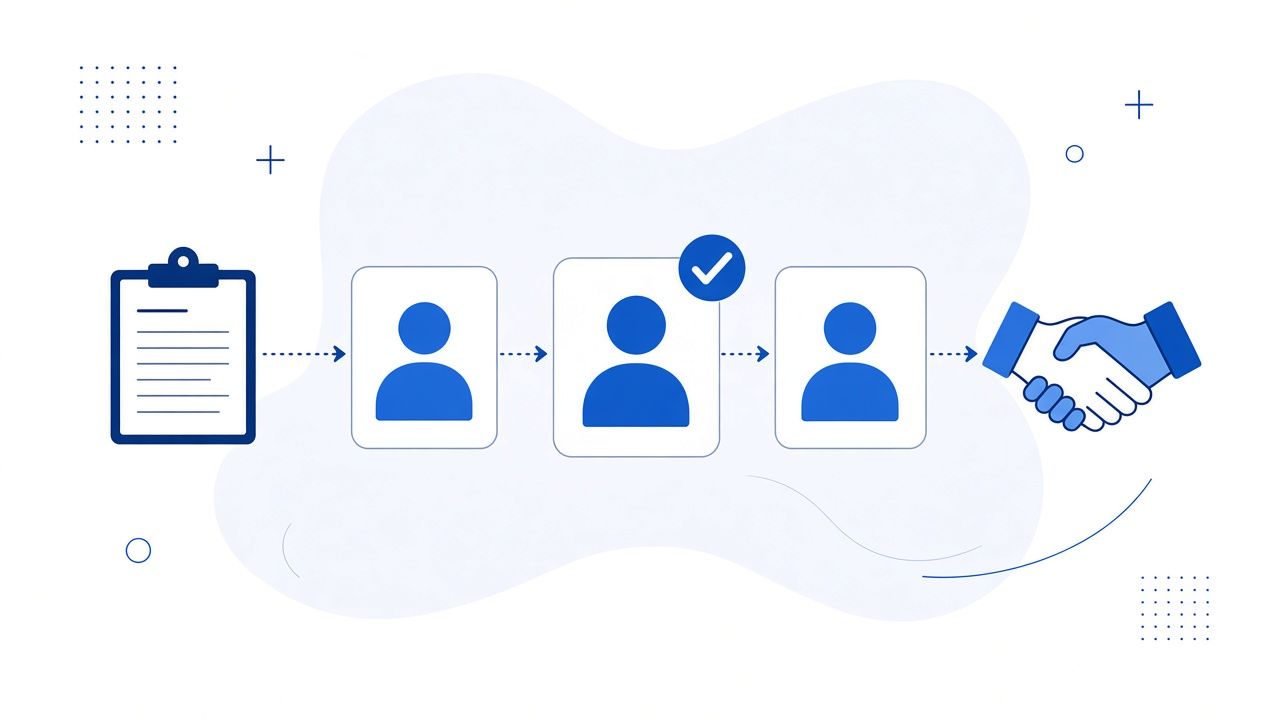
In the first 30 days, one small workflow in test and a written map of the next ones. By 60 days, two or three workflows in production with a check. By 90 days, runbooks, a backlog, and a teammate who can pause a workflow without the specialist on the call.
This plan is a suggestion you can edit. It is not a Rekruuto service level, and it is not a result from a past client.
Days 1 to 30. Learn the tools and the vocabulary. Shadow the process. Ship one quick win that is easy to undo, such as a draft that waits for approval, or a tag that does not email a customer. Write down three candidate workflows and say which one is a bad idea. Agree how you will hear about failures.
Days 31 to 60. Take the next one or two workflows into production. Add a log and an alert. Review the first errors with you. Record the monthly tool and API cost next to each workflow so a cheap task cannot hide an expensive prompt. Train the internal owner to run the happy path.
Days 61 to 90. Finish runbooks for everything live. Run a short training session for the people who touch the output. Leave a ranked backlog. Remove or pause anything that failed the test and was left “temporarily” on. Agree the weekly rhythm: what they will change, what they will only propose.
If day 90 arrives and every workflow still lives in one person’s head, the plan has failed even if the demos look good. Documentation is a deliverable, not a nicety. How that documentation should look is covered in who maintains automations after launch.
A job description you can paste
Edit the brackets. Delete anything you do not mean.
Title: AI Implementation Specialist
You will turn repeated operational work into documented workflows in our existing tools. You will not ship customer-facing messages, payments, or contract changes without a named human approving them.
In the first 90 days you will: map our current process, ship one workflow in the first month, move two or three into production with monitoring by day 60, and leave runbooks plus a backlog by day 90.
You need proof of workflows you have run in production, using Zapier, Make, n8n, or a product’s own automation, plus plain-language writing. A degree is not required.
You will work in our accounts. We provide a named manager, a sample of real cases, and a monthly cap for tool and model spend.
This is a full-time seat. At Rekruuto the published start is $2,500 a month, with a 14-day start and a 1-week risk-free trial. Replace that sentence if you are hiring another way.
Frequently asked questions
What does the specialist produce in a normal week?
A queue of workflows being mapped, tested, watched, or fixed, plus notes someone else can follow. The output is a running process, not a slide.
Do they need to be a software engineer?
No. Hire an engineer to build your product. Hire a specialist to connect the tools you already use and keep those workflows documented.
What should be ready on day one?
A named owner, company-owned accounts, one written process, and a sample of real cases with the right outcome marked. Without those, the first month is waiting.
What is a fair 90-day expectation?
One workflow in test in the first month, a few in production with alerts by day 60, and runbooks plus a backlog by day 90. Treat that as a plan you agree, not a guaranteed result.
How do I judge the match in the trial?
Use the first week to see whether they can map one real process, test it on a sample, and leave notes a colleague can follow. The trial terms are on the risk-free trial page.
Book a call
If the checklist is mostly ticked, book a strategy call and look at the AI Implementation Specialist role with the job description beside it. If you are still deciding whether the work is repeated enough to hire for, take the AI automation scorecard first. The 1-week risk-free trial is the right moment to see whether the 30-day plan fits your actual process.